 by Net Reputation
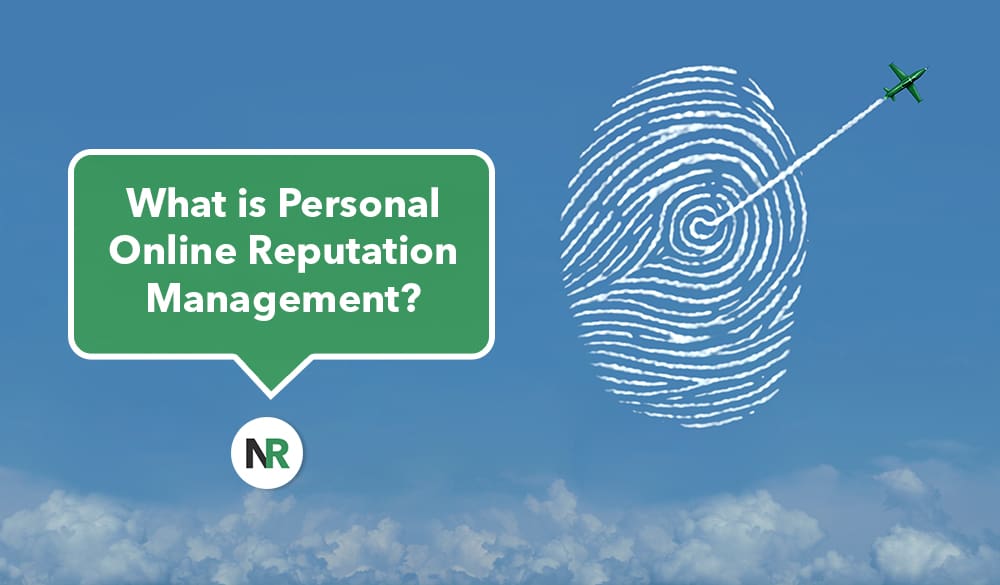
Exploring the impact of digital identity: a graphical representation of personal online reputation management in the information age, symbolized by a fingerprint and an airplane trail.
Personal reputation management is designed to give you competitive advantages, allowing you to reach your goals in life.
No matter who you are, your online reputation matters. It’s the gateway to new opportunities, or it can stand in the way of you achieving your goals.
In today’s always-on digital environment, how you’re perceived online can have a dramatic impact on your goals. This public perception is known as your online reputation.
- A positive reputation builds trust, allowing you to capitalize on emerging opportunities.
- A negative reputation, on the other hand, can interfere with your ability to achieve the things you want in life.
Business owners know that a favorable online reputation has intrinsic value. And if you’re an individual, your personal reputation matters in the online world.
With personal reputation management, you can establish your personal brand, stand out in search results and build trust with others.
As the leader in customized reputation management strategies, NetReputation knows how valuable your personal reputation is in the digital environment. In this guide, we will explore personal reputation management, giving you a clear picture of why it is so important and how personal online reputation services can create a robust and positive personal brand to help you achieve your goals.
To speak with a personal reputation management expert today, call us at 888-826-5494 or fill out the contact form below for a free consultation.
Key Takeaways
- Personal online reputation management manages and improves how an individual appears online. It is used by professionals, job-seekers and public-facing individuals who want to control their digital first impression.
- Personal ORM shapes search results, social, reviews, public records, AI-generated answers to ensure positive, accurate information appears first.
- A managed personal reputation supports hiring, lending, partnerships and trust decisions, while also reducing stress by limiting visibility of harmful content.
- Small improvements can appear in 30 to 90 days while stronger results take three to six months and complex cases can take six to 12 months.
- Basics like monitoring and profile optimization can be done independently, but professionals are needed for defamation, doxxing, or stubborn, high-ranking negative content.
- AI search tools summarize your reputation directly, making it critical to control online content, as AI now forms first impressions.
What Is an Online Reputation?

Source: Unsplash
In simple terms, an online reputation is the general public perception of you or your business. Your reputation tells others who you are, what you stand for and what values you hold. It’s vital to building the credibility and trust you need to reach audiences, attract customers and position yourself for success.
Your online reputation is developed through the information making up your digital footprint. This can include:
- Social media posts
- Online mentions
- News articles
- Images
- Public records
- Blog posts
Every time someone mentions your name online, search engines like Google pick up on these mentions. When someone searches for you, the information they find in search results can have profound effects on their behavior toward you.
Positive content, such as great online reviews, favorable news articles and glowing personal recommendations, can build and strengthen your online reputation. By shining a spotlight on your brand’s value, expertise and achievements in search results, positive online assets attract customers while letting you take control of the online narrative.
Negative content, by contrast, erodes the trust others have in you, potentially harming your digital reputation. If someone finds negative information in search results, they are likely to form an unflattering opinion of you.
To speak with an expert about promoting positive content and limiting the negative content people can find about you, call us at 888-826-5494 today.
The Power of a Positive Online Reputation
Source: Unsplash
Think about how you use Google or other search engines in your everyday life. Chances are, you conduct a simple Google search to learn about people and places around you. The information you find in search results can influence how you feel and make decisions.
A positive reputation online has tremendous value, helping others to understand who you are and what you represent. For individuals, your online image can open new doors, helping you achieve goals in your personal and professional life.
When you promote a positive online image, you may be able to:
- Be accepted into the school of your choice
- Secure a home, auto, or business loan
- Start dating someone new
- Get that dream job you applied for
With personal reputation management, you can create and support a strong online presence, helping you to stand out in the eyes of others. Your positive image is a gateway to your future, allowing you to reach your goals.
Risks Associated with a Negative Online Reputation

A negative search result can cost you a job offer, a loan, a college admission, or a business deal before you ever get a chance to explain.
For example, consider what would happen if a hiring manager, loan officer, or potential client runs an informal Google check on you and finds a single problematic result. Most of the time, they’ll move on without ever raising their concerns with you directly. In fact, recent research from CareerBuilder shows that 70% of employers hop online to research candidates during the hiring process, paying close attention to their social media presence in particular.
Of course, this dynamic also works both ways. As a candidate, you can search a company’s reputation online before deciding whether to apply there. What you find might significantly impact your decision, especially if reviews from current or former employees paint a picture of what it’s like to work there. According to Glassdoor’s Employer Branding 101 guide, 86% of applicants will research company reviews and ratings before deciding where to apply for a job.
Negative articles found in search results can have a damaging effect on your online reputation. Other factors that contribute to a bad internet reputation include:
- Negative online content, like arrest records, unflattering images, or mugshots
- Negative mentions on social media outlets
- Negative news articles
- A blog post that says negative things about you
- AI-generated misinformation
It cannot be overstated that your personal and professional reputation can help — or hinder — your ability to achieve your goals in life. It can either work for you and your goals or stand between you and promotions, relationships and potential customers.
If a negative reputation is getting in your way, you can stop the cycle today by calling us at 888-826-5494 for a free consultation.
Business Reputation Management vs. Personal Reputation Management

In business, online reputation management (ORM) is the process of shaping consumer perceptions of your company and professional brand. This strategy creates, maintains and repairs a consistent, visible and positive online image of your brand.
Personal reputation management has much the same goal, but it’s geared toward individual needs. With personal reputation management, an online reputation management company focuses on your unique aspects and then shares them with others.
The main difference between business reputation management and personal reputation management is that owners are trying to sell their products and services while you are simply trying to create a favorable impression of yourself in the digital world. No matter if you are a business or an individual, online reputation management companies use many of the same tools, technologies and tactics to produce a powerful brand image that helps you stand out in search results.
How Long Does Personal Online Reputation Management Take?
There isn’t a one-size-fits-all timeline for personal online reputation management. Short-term wins are usually attainable in weeks, while meaningful, page-one shifts can take three to six months or more. Deeper suppression and removal campaigns can run even longer, requiring around six to 12 months to see significant results.
The time you can expect to wait will depend on several unique factors, including:
- The age of the negative content
- How authoritatively the source ranks
- How much positive content currently exists about you online
- The current search volume for your name
- Whether legal removal paths are necessary and available
Additional factors, such as the volume of negative content, the competitiveness of search results for your name and the resources devoted to the campaign, can also affect the overall timeline.
Let’s take a closer look at the most common reputation management timelines.
30 to 90 Days
Short-term timeframes are more realistic for individuals or businesses who need simple steps to clean up their online reputation, such as:
- Opting out of data brokers and people-search sites
- Claiming and optimizing owned profiles
- Setting up basic monitoring tools
During this period, you may also begin publishing positive content and correcting inaccurate information across key online profiles.
Three to Six Months
This is approximately how long it takes for new content to start ranking and pushing down moderate negative results. Content removal and suppression strategies work hand-in-hand to help you push harmful and outdated content lower on search results, replacing it with positive, authority-building content that strengthens your digital presence and improves how you appear online.
Six to 12+ Months
It can take a little longer to remove or suppress more challenging content, such as stubborn negative news, persistent mugshot listings, or contested defamation claims.
Some content is not easy to quickly remove and it’s important to understand that before choosing a route. For instance, moving well-indexed news from authoritative outlets, suppressing court records governed by public access law and removing content that you do not own or control can take longer and, in some cases, may not be possible.
This is the reason most reputable firms quote a six-to-12 month engagement, not a one-time fix. Ongoing reputation management helps you stay on top of your digital footprint, monitor new content and act proactively to control your image. It also helps prevent future issues from gaining visibility and protects the process you’ve already made.
DIY Personal Reputation Management: What You Can Do Today
Taking a DIY approach to personal reputation management can be a real and useful starting point. However, some situations call for professional help.
If you do go this route, especially in the beginning, there are several concrete steps you can take, starting today:
Audit Your Own Search Results
Search your name in a private browsing window across Google, Bing and DuckDuckGo. Note what appears on the first and second pages. Save screenshots and repeat this process monthly.
Pay close attention to any negative articles, outdated information, social media profiles, people-search listings, images, videos, or forum discussions that appear prominently in search results. Creating a simple spreadsheet can help you track changes over time and spot potential issues.
Set up Alerts
One of the easiest ways to monitor your online reputation is by creating Google Alerts for your name and reasonable variations, including common misspellings. Then, Google will notify you when new indexed content containing those terms appears online.
While Google Alerts is free, it does have limitations. It often misses social media mentions, discussion forums and other real-time conversations that take place across the web. This is why dedicated monitoring platforms exist. These tools provide broader monitoring capabilities, although coverage, price and pricing will vary by platform.
Claim and Optimize Your Owned Profiles
Claim and fully complete the profiles you control, including:
- Your personal website
- Social media accounts
- Professional directories
- Google Business Profile (if applicable)
You should also consider registering your own domain name, even if it initially only hosts a short biography or professional contact information. Owned media is one of the strongest long-term defenses in reputation management because you control the content, messaging and updates. These updates can also help occupy valuable search result space over time.
Remove Yourself From Data Broker Sites
Data brokers and people-search websites often publish personal information such as addresses, phone numbers, relatives and age ranges. Removing yourself from these databases can reduce privacy risks and limit the amount of personal information available online.
For step-by-step instructions, see our opt-out guides for major data broker sites.
Be aware that this is one of the most time-consuming DIY reputation management tasks. There are often 50 or more major data broker sites, each with its own opt-out process, verification requirements and timelines. Even after successful removal, many sites will relist your information within months. For ongoing management, consider using an internet privacy service that automates removals and monitors for reappearances.
Publish Positive Content Under Your Own Name
Creating positive, relevant content can help strengthen your digital footprint and gradually improve what people find when they search for you. Effective options include:
- A personal website
- A LinkedIn article series
- Guest contributions to industry publications
- A newsletter on Medium or Substack
- A YouTube channel
Instead of trying to publish everywhere at once, choose one or two channels that closely align with your audience and expertise. Consistent publishing typically produces better long-term results than spreading your efforts across numerous platforms with irregular updates.
DIY reputation management can be highly effective for routine monitoring, privacy improvements and building a stronger online presence. However, it often reaches its limits when dealing with certain types of content, such as:
- A high-ranking defamatory news article
- A doxxing incident
- Multiple coordinated attackers
- A public figure visibility challenge
In these situations, professional assistance is often the most practical path forward and may require the comprehensive five-step process outlined in the next section.
What Is the Personal Reputation Management Process?

Source: Unsplash
Every personal reputation management company is different, but leading service providers like NetReputation use proven strategies to build, reinforce, or repair reputations for clients. They execute these strategies over time, building the digital firewall you need to protect your reputation and pursue your goals.
The online reputation management process includes five critical components:
1. Reputation Analysis

Source: Unsplash
Every online reputation management campaign begins with a careful analysis of your digital footprint. Reputation specialists scour the web for mentions of your name in search engine results and across social media platforms.
Once completed, reputation analysis provides valuable insights that assist with the creation of robust strategies to establish your online image, improve your visibility in search results and reinforce your favorable reputation.
Analysis continues well into your campaign. Reputation monitoring allows you to identify potential threats to your brand before they can cause harm. By monitoring your online reputation, you gain competitive advantages over others.
2. Web Property Development

Source: Unsplash
Digital assets are at the heart of the modern online reputation management initiative. Your account manager will spearhead the creation of these assets, including:
- A personal website on a domain you own
- A fully optimized LinkedIn presence
- Profiles on the platforms where your audience is (X, Instagram, YouTube, TikTok, industry-specific networks)
- Longer-form owned media like a newsletter or YouTube channel
- Wikipedia where eligible
Each of these assets is under your control and will be used in subsequent parts of the reputation management process to reach your target audience. By adding link-building strategies to your web properties, you help search engine algorithms to more accurately categorize and index these properties, propelling you to the top slots in search results.
A quick note about Wikipedia: It can be high-value when the subject qualifies for a page under Wikipedia’s notability guidelines, but it is not appropriate for most individuals. To learn more check out our guide to individual Wikipedia page solutions.
3. Content Creation

Source: Unsplash
Once online assets are created, it’s time to populate them with positive content. All content is developed with a keen eye for search engine optimization (SEO), which is essential for ensuring great visibility in search results. This is also known as optimization, the fuel that powers each positive article, post and profile up the search results ladder.
Positive information created for your ORM campaign can include:
- Social media posts
- Blogs and news articles
- Videos
- Slideshows
- Press releases
- Interviews
- Thought leadership articles
By creating impactful and engaging content for your audience, you gain significant advantages in the digital environment. This content helps you share your story across your personal social media accounts, helping others to learn about you, your personal life and what you stand for.
4. Publishing

Source: Unsplash
Content publishing plans are the next step in the process. By publishing content on a regular schedule, you are able to secure rankings on the first page of Google results. Every piece of content the ORM team creates is shareable on social media, helping to improve visibility on social channels.
The goal of publishing is to improve personal brand awareness and to get your story in front of the people who matter most: those who are searching for you on the first few pages of web search engine results.
Publishing positive content has another important role in ORM campaigns. As search engines index this new content, this has the effect of suppressing negative content online. In effect, you remove negative items from the first pages of search results by pushing them down.
5. Content Promotion
Source: Unsplash
The final piece of the online reputation management puzzle is promotion. NetReputation uses an effective promotion strategy — think of it as a public relations campaign — that combines owned promotion channels like email lists, earned promotion channels like social media sites and paid promotional avenues like sponsored content on high-authority websites to make you visible online. In the digital age, content promotion is the icing on the ORM cake, producing the results you need to stand out.
Personal Reputation Management in the Age of AI Search
Today, AI-generated answers, including Google AI Overviews, ChatGPT, Perplexity, Gemini and other emerging AI search tools, increasingly summarize a person’s online presence before the searcher ever clicks a link. As a result, your online reputation is no longer defined solely by what appears in traditional search rankings. It’s also shaped by the way AI systems interpret and present information about you.
The rise of AI-powered search has introduced several important shifts that affect personal reputation management. First, it has changed the types of sources that influence visibility and credibility online. AI answer engines tend to favor authoritative, well-established sources such as:
- Major news publications
- Government records
- Professional directories
- LinkedIn profiles
- Academic sources
- Wikipedia entries
- Well-cited websites
Content that clearly answers questions and demonstrates expertise is more likely to be referenced than generic social media posts or thin website content.
Second, AI systems often synthesize information for multiple sources at once rather than relying on a single webpage. This could amplify inaccuracies, outdated information and negative content, especially if they appear consistently across several sources. At the same time, a strong and well-managed digital presence can reinforce positive and accurate narratives across AI-generated responses.
However, traditional online reputation management (ORM) still matters. AI models aren’t creating reputations from scratch. They’re drawing conclusions from the same public web that search engines index and users can access Google Strong, accurate, well-cited content remains one of the most effective ways to influence both traditional search results and AI-generated summaries.
At the same time, search behavior itself is changing. A March 2025 Statista study of nearly 69,000 Google searches found that users who see an AI overview will click a traditional search result in roughly 8% of visits, compared to 15% without an AI overview present. This suggests that fewer users are clicking through to individual websites when AI-generated summaries already provide the information they need.
This creates a new challenge for individuals and businesses. Ranking on page one of Google is still valuable, but it is no longer the only objective. Increasingly, the goal is to ensure that the information AI systems find and summarize is accurate and favorable.
Generative Engine Optimization (GEO) is the practice of shaping how AI answer engines describe you or your brand. While traditional ORM focuses on search rankings, review management, content suppression and online visibility, GEO focuses on influencing the sources and signals that AI systems use to generate answers. In today’s search landscape, the strongest reputation strategies combine both approaches. A 2018-era ORM strategy is no longer enough.
Choosing Online Reputation Management Services: Frequently Asked Questions

Every individual has different goals in life and different concerns about their visibility in the online environment. The one similarity that brings these individuals together is this: A good reputation is an essential part of being online.
ORM service providers offer a wide range of tools and strategies to help clients achieve their personal and professional goals. How do you choose the best ORM service provider? Here are some of the most frequently asked questions in the ORM industry.
What services do you offer?
Leading ORM firms combine reputation repair services, social media management, content creation and promotion strategies to produce the results clients deserve. These services work to mitigate the harm and visibility of negative content while increasing the visibility and strength of positive results in SERPs.
How much do ORM services cost?
Every campaign is different and not every client will need the same services to create or support a healthy internet reputation and online presence. Some providers offer fixed rates for services, while others employ customized service packages tailored to your unique needs and goals.
Why is a social media presence so important?
Social media networks have dominated the online environment over the past decade. Social media platforms like Twitter, Facebook and YouTube give anyone the ability to connect with others. Because billions of internet users are on these platforms every day, having an online presence on the most popular platforms is a pillar of a robust brand management campaign.
What is personal online reputation management?
Personal online reputation management is the process of monitoring, building and protecting the digital footprint of an individual. This is different from business reputation management, which is wider in scope and focused on shaping how the public perceives a particular brand.
How is personal reputation management different from business reputation management?
Personal and business reputation management differ in terms of scale, channels and objectives. Personal reputation management focuses on an individual’s online image, privacy and visibility across platforms like LinkedIn and personal social profiles while business reputation management centers on attracting customers through channels like Google Business Profiles and review platforms.
How much does personal online reputation management cost?
The cost of personal online reputation management can vary widely based on the severity of the situation, the volume of content to remove or suppress and the overall timeline of the project. Check out our guide for a more detailed cost breakdown.
How long does personal ORM take to show results?
Personal online reputation management can begin producing small improvements within 30 to 90 days while more meaningful search result changes typically take three to six months. More complex removal or suppression campaigns often take six to 12 months or longer.
Can I manage my online reputation myself?
Many aspects of online reputation management can be handled yourself, including monitoring search results, removing data broker listings and publishing positive content. However, professional help adds significant value when dealing with complex issues, such as high-ranking negative news articles, defamation, doxxing incidents, coordinated attacks and legal removal requests.
What is the difference between removing and suppressing negative content?
Removing negative content means eliminating it at the source or getting it de-indexed from search engines so it no longer appears in search results. Suppressing negative content means pushing it lower in search rankings by publishing and optimizing positive, authoritative content above it. Most reputation management companies use a combination of both strategies.
How does AI search affect personal reputation?
AI search affects personal reputation by summarizing information about you before users click traditional search results. This means your reputation is increasingly shaped by what AI systems say, not just what ranks on page one. A March 2025 Statista study found that users who see AI Overviews only click traditional results about 8% of the time versus 15% without them.
How do I monitor my online reputation on an ongoing basis?
You can monitor your online reputation by regularly searching your name in private browsing at least once a month, setting up Google Alerts for your name and variations and periodically reviewing your search results and social profiles for new or changed content. Dedicated individual reputation monitoring services offer a more complete, long-term level of tracking.
When should I hire a personal reputation management firm?
If you encounter a high-ranking negative news article, a doxxing or harassment situation, multiple coordinated attackers or a defamation claim, it’s best to hire a personal reputation management firm to handle the next steps for you. This also applies to any case where you’re facing a major life event (such as a new job, board appointment or public-facing position) where the reputational stakes are too high to take a DIY approach.
To learn more about personal reputation management services or to schedule a free reputation consultation, call NetReputation at 844-461-3632 or complete the form below to get in touch with one of our reputation specialists.
Everyone with a professional career needs to be aware of their personal reputation in 2024
If I used another firm in 2020, can your team use the previously created website to start a new program?
Absolutely! Give us a call at 844-461-3632.
very important in todays age
This is a great overview of personal online reputation management. I especially appreciate the emphasis on the importance of a positive online reputation and the steps that can be taken to achieve one.
Overall, this is a valuable resource for anyone who wants to learn more about personal online reputation management. I highly recommend it!
How a business or person appears online is everything in today’s era. Great resource!
Essential guide for maintaining a positive online presence and reputation.
The distinction between personal and business reputation management provided a valuable perspective, highlighting the importance of a positive online image. Seeing how much our digital presence can affect real-world opportunities is eye-opening. The advice offered is a crucial reminder to manage our online footprints actively. Thanks for the insightful guidance; it has inspired me to be more mindful of my online presence.