 by Lindsay Pietroluongo
Key Takeaways
- Burying negative search results means pushing damaging links off page one by ranking better content above them while removal means deleting the content at its source.
- Most reputation cases need both strategies in combination, as neither alone reliably clears page one.
- Free Google tools like the Refresh Outdated Content Tool and the Personal Information Removal Tool along with explicit imagery and doxxing forms handle a meaningful share of removal cases.
- It can take one to four weeks for removal attempts, one to three months to build content and three to nine months before noticing visible movement on competitive queries.
- Press releases on high-authority distribution networks remain one of the fastest ways to publish ranking-eligible positive content.
- Hire an online reputation management firm when the content is multi-source, legally complex or commercially damaging enough that the time cost of DIY exceeds the cost of hiring.
Request a Free Consultation
What It Means to Bury Negative Search Results
Burying is the practice of reducing the visibility of unwanted or damaging content by publishing and optimizing stronger, more relevant content that ranks higher in Google’s search results. Instead of trying to eliminate the original content which is often hosted on third-party sites and outside of direct control, burying focuses on influencing what users see first by occupying the most valuable positions on page one. This is commonly referred to as reverse SEO.
Burying vs. Removing: Two Different Strategies
This approach is different from content removal. Removal means getting the original page taken down at the source which can be fast and highly effective when successful but is not always possible due to platform policies and legal limitations. Burying can take longer and requires sustained effort including publishing optimized articles, press mentions, profiles and authoritative pages but it builds a long-term positive footprint that influences rankings over time.
Why Page Two Is Effectively Invisible
The importance of ranking position is significant. Industry studies show that the first organic result captures a large share of clicks with the top three search engine result pages earning the majority of user attention.
Search visibility in 2026 is also shaped by AI-driven experiences like Google’s AI Overviews (formerly part of the Search Generative Experience). These summaries pull information from multiple indexed sources and appear above traditional results. This means that strong positive content can influence not just rankings but also how AI systems describe a person or brand.
Ultimately, burying is a strategic, compounding process that takes time but produces durable results while removal is faster when available but limited in scope. Most effective online reputation management (ORM) strategies use both in tandem depending on feasibility and risk.
Where Negative Search Results Actually Come From
Negative search results fall into six common source categories and each have different removal options and ranking behaviors. It’s helpful to identify which categories apply to your specific situation first because the strategy for removal or suppression varies depending on the source type and whether the content is indexed directly, syndicated or user-generated.
News Articles and Press Coverage
News articles are typically the hardest results to remove, because they’re often linked to legitimate journalism. Suppression is often the primary strategy used. According to Google Search Central content policies, news content is generally not eligible for removal unless it violates specific legal or policy standards such as copyright infringement or explicit personal data exposure.
In some cases, content may potentially involve defamation if it includes false statements presented as fact that harm a person’s reputation. Whether content qualifies depends on jurisdiction and legal interpretation.
People-Search and Background Check Sites
People-search sites and data brokers like Whitepages, Spokeo, MyLife, BeenVerified, US Search and others can include a high volume of personal information which is often duplicated from one site to another. Many of these platforms have designated opt-out processes that work but require ongoing maintenance because data reappears.
Google’s removal policies may apply in limited cases here particularly when sensitive personal data is exposed or when the content falls under doxxing categories outlined in Search Central documentation.
Mugshot and Court-Record Aggregators
Google heavily indexes mugshots and court records because they are legally public records. Some states including California, Illinois, New York, Florida and Georgia have laws restricting commercial mugshot publication.
For example, California Civil Code Section 1798.91.1 restricts certain mugshot publication practices and the Illinois Criminal Identification Act includes provisions that limit dissemination under specific conditions. These laws vary widely. Mugshot removal options depend heavily on jurisdiction and whether compensation is being requested for removal.
Review and Complaint Sites
Review sites like Yelp, Google Reviews, the Better Business Bureau (BBB), RipoffReport and Glassdoor often have specific platform policies that determine removal eligibility. For example, Google’s policy allows users to report reviews that violate specific rules but does not allow removal simply for being negative.
The Federal Trade Commission (FTC)’s 2024 final rule on fake reviews reinforces that manipulated, deceptive or purchased reviews may be subject to enforcement action which impacts how platforms moderate and evaluate the authenticity of review content.
BrightLocal’s 2026 Local Consumer Review Survey shows that two in five consumers read reviews each time they check out a business. This means that even a small number of negative reviews could have long-term visibility and underscores the importance of long-term review management services.
Social Media and User-Generated Content
Individuals can delete their own personal posts but third-party content typically requires a platform report under the specific policy violated. Most platforms evaluate removal based on harassment, impersonation, copyright or privacy violations rather than general reputational harm.
AI Overviews and Generative Search Summaries
Today, AI summaries pull from indexed sources. If the underlying ranking pages improve then the AI summary often shifts. This is observed behavior and is not guaranteed. In practice, generative search systems like AI Overviews tend to update dynamically based on index changes. This means reputation improvements to source pages can directly influence what appears in AI-generated summaries over time.
Track 1: Remove Negative Content at the Source
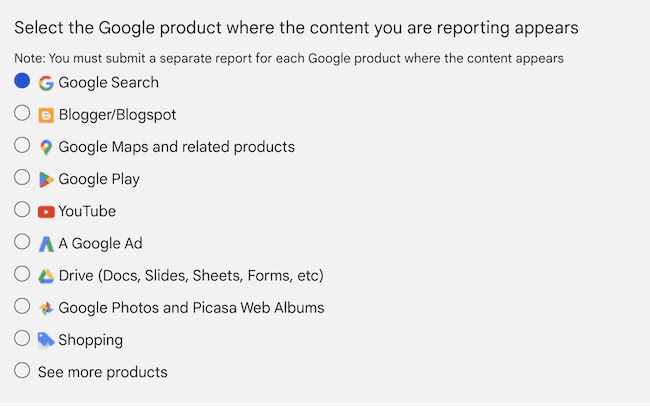
The fastest way to clear negative content from search results is to eliminate the URL at its origin. This can be done by getting the content deleted by the publisher, requesting removal through Google under specific policy categories or having the site owner apply a noindex tag to exclude the page from search indexing. Many situations require a combination of these approaches and removal should be prioritized before any suppression work begins.
Ask the Publisher or Site Owner
One option is to contact the site’s publisher or author directly. This approach is most effective when the content contains factual errors or outdated information or when the editorial team is open to updates or corrections. In these cases, a cooperative request can often lead to edits, updates or full removal.
However, direct outreach can occasionally backfire. In rare situations, attempting to remove content from a sensational site may contribute to what is known as the Streisand effect where efforts to suppress information draw additional attention. This leads to broader sharing or republishing across other platforms.
For this reason, requests should be polite and narrowly framed. It’s often more effective to request a correction or update that addresses the issue directly instead of demanding full removal.
Submit a Google Removal Request
Google offers several removal tools that can help reduce content visibility in search results. Each one is designed for a specific purpose and has strict eligibility criteria.
One is the Refresh Outdated Content Tool. If a page has already been edited or updated by the publisher but Google is still displaying the old version in search results or cached snippets, you can use this tool to request a recrawl. This does not remove the content from the web but can speed up the removal of outdated search listings and cached information.
Another is the Personal Information Removal Tool. This is useful for certain categories of sensitive information, such as personal contact details, doxxing material, financial account details, medical records and non-consensual explicit imagery including AI-generated content. If your request is approved then Google may remove the content from search results even if the page remains online.
Legal Removal Requests are also available. When content violates applicable law, Google accepts removal requests through a designated form. These requests can cover issues like copyright infringement, court orders, defamation findings, trademark issues and more. Google reviews each request individually and may limit removal to specific countries or remove the content from global search results depending on the circumstances.
De-Index With a Noindex Tag
A publisher may be unwilling to delete a page entirely but may be willing to stop it from appearing in search results. In these situations, requesting a noindex meta tag can be an effective compromise.
A noindex tag is a technical instruction placed on a webpage that tells search engines not to include the page in their search indexes. The content will remain live and accessible through a direct URL but it will gradually disappear from Google and other search engines after they recrawl the page.
This approach is often more successful than requesting complete deletion because it allows both parties to achieve part of their goal. The publisher keeps the page online while the affected business or individual reduces the likelihood that the content will appear when someone searches their personal or company name.
Noindex requests are especially useful for outdated articles, old dispute-related content, resolved complaints and other material that still exists for archival purposes but no longer serves a strong public interest. They can also be helpful when a publisher acknowledges concerns about fairness or accuracy but is reluctant to remove a page entirely.
File a Platform Policy Report
Most websites that host user-generated content have formal reporting systems for material that violates their policies. Platforms generally do not remove content simply because it is negative but they may remove content that breaches specific rules related to harassment, impersonation, conflicts of interest, spam, misinformation or other prohibited conduct.
For instance, Yelp allows businesses and individuals to report reviews that violate its content guidelines. Common grounds include reviews based on someone else’s experience, promotional content, threats or content that’s clearly unrelated to a genuine customer experience.
Likewise, Google Business Profile provides a Reviews Removal Tool that allows business owners to flag reviews for policy violations and Facebook allows users to report posts, comments, pages and profiles that violate its Community Standards. Similar policies and reporting frameworks are in place for Glassdoor, Reddit and other digital platforms.
Legal Escalation: DMCA, Defamation and Court Orders
When voluntary removal efforts fail, legal remedies may become an option. One of the most straightforward paths is a DMCA takedown request which can be effective when copyrighted text, images, videos or other original content has been used without permission.
In situations involving reputational harm, defamation claims may apply when content contains false statements of fact presented as true. Defamation laws vary by jurisdiction and proving a claim typically requires a detailed legal analysis, as well as expert witness services in certain cases.
In some cases, a court order may even be necessary to remove content or compel cooperation from a publisher or platform. This may occur when the party hosting or publishing the content refuses voluntary requests and no platform policy violation exists. When they work, professional content removal requests typically take two to four weeks to take effect though more complex legal routes can take months.
Note: NetReputation does not provide legal advice. This guide is for informational purposes only and readers should consult a qualified attorney regarding their specific circumstances and legal options.
Track 2: Bury What You Cannot Remove

If removal is not possible then the goal shifts to outranking the negative content with stronger positive results. This approach is often called reverse SEO, a core reputation management strategy focused on improving what people see first in search results.
This second track is slower than removal but often produces more durable results because it builds positive digital assets that continue to rank over time. It is the foundation of most ORM campaigns and is frequently used in both personal and business reputation repair efforts. Businesses facing review issues, negative press or any type of brand-related search problems may also benefit from NetReputation’s business reputation repair guide.
The five steps below are the standard playbook used by professional ORM teams. It normally takes around one to three months to build the foundation and three to nine months before seeing visible movement on competitive queries.
Important: The order of these steps matters. Building profiles before there is original content to link to is wasted effort and sending press releases before profiles and a website exist gives the PR nowhere to point.
Step 1: Audit and Strengthen Your Existing Online Profiles
Major social and professional profiles rank well in personal-name and brand-name searches because they carry high domain authority. When optimizing, prioritize the platforms with the strongest ranking signals including:
- X (formerly Twitter)
- Crunchbase (for businesses)
- About.me (for individuals)
Make sure each profile is complete and keyword-optimized and post fresh content consistently. Reviving dormant profiles is faster than building from scratch.
Profile Platforms That Rank Best in 2026
Not all profiles have the same ability to rank in Google. For businesses, the highest-priority platforms are typically LinkedIn Company Pages, Crunchbase, Facebook Business Pages, X, YouTube channels and Google Business profiles for companies that serve customers in a specific local area.
Glassdoor should generally be prioritized only when addressing employer or recruiting-related reputation issues. Businesses looking to strengthen their search presence can learn more through NetReputation’s business branding solutions.
For individuals, the strongest assets are usually a LinkedIn profile, X account, About.me pages, Medium profile, a personal website on a name-based domain such as firstname-lastname.com and relevant professional association directories. Specialized profiles can also be valuable in the right industry.
For example, journalists often benefit from maintaining an active Muck Rack profile. These platforms often form the core of a personal branding strategy because they frequently rank for name-based searches. Additional guidance is available through NetReputation’s personal branding services.
Whenever possible, revive existing profiles before creating new ones. Older accounts often have advantages that newer profiles lack including:
- Domain age
- Historical content
- Established backlinks
- Follower signals
- Existing search visibility
What to Update on Every Profile
Completing your profile means more than simply filling in every available field. Each profile should include a professional photo or logo, a branded banner image, a keyword-rich bio written in natural language and links to other owned properties such as a website, social profiles or published content. Consistent branding across platforms helps search engines connect those assets to the same person or business.
Profiles should also demonstrate activity. If possible, establish a realistic posting cadence. Even one or two updates per month is better than long periods of inactivity. Fresh content signals that the profile is maintained and relevant. Regular posting can also help counter the visibility issues discussed in NetReputation’s overview of negative social media impacts.
Finally, review whether each profile still reflects the name you want associated with your online presence. In cases involving a rebrand or legal name change, an outdated profile may reinforce unwanted search results. If a profile prominently ranks for a name you no longer want on page one, it may become a liability rather than an asset and should be updated, consolidated or replaced as part of a broader reputation strategy.
Step 2: Build a Personal or Branded Website

A website is the most important digital asset in any reputation management campaign because it is fully owned and controlled by the person or business it represents. Aim for an exact-match domain (yourname.com or yourbusiness.com), structure the site around clear pages that match what someone searching your name actually wants to know and treat the homepage as the highest-priority page for ranking.
Choosing the Right Domain
When choosing a domain, the first choice should be an exact-match name, such as yourname.com or yourbusiness.com. If those are unavailable, close alternatives like .net or .co are usually acceptable. Avoid hyphens, unusual spellings and creative variations that people are unlikely to search for.
For high-profile individuals and public-facing brands, purchasing common typo-domains can also serve as a defensive measure against impersonation or traffic diversion.
For most reputation projects, WordPress remains the preferred platform because it offers the best combination of cost, flexibility, scalability and search engine optimization (SEO) control. Squarespace and Wix are easier for beginners and can work well for smaller projects but they generally provide less customization and long-term optimization flexibility. Organizations that need a more customized approach may benefit from professional website design and development services.
Core Pages Every Reputation Website Needs
Every reputation-focused website should include a homepage that prominently features the person’s or company’s name and positioning statement above the fold. An About page should provide credentials, background information and a professional biography. Businesses typically need a Services or Work page while individuals often benefit from a Projects or Portfolio section.
A Press or Media page can highlight positive coverage and a Contact page creates credibility and accessibility. A regularly updated blog provides opportunities to publish fresh content that can rank for branded searches over time.
Basic, on-page SEO should be implemented from the beginning. Title tags should include the target name, meta descriptions should be written to encourage clicks from search results and the primary H1 heading should contain the name being promoted. Adding Person or Organization schema markup to the homepage helps search engines understand who the site represents.
Unlike Medium articles or other third-party platforms, a personal website is an owned asset rather than a rented space. That ownership creates long-term value and provides the strongest foundation for branded SEO campaigns including advanced SEO services and generative SEO strategies designed to influence both traditional search results and AI-generated answers.
Step 3: Publish New Content That Targets Your Name
Suppression only works when there’s a steady stream of original, indexed content competing for the same search queries as negative results. Search engines must have enough relevant, authoritative material to choose from. That means your name or brand needs to appear naturally across multiple high-quality pages and platforms, published consistently over time.
What to Write (and Where to Publish It)
Effective reputation content typically starts with pillar pages on owned properties, especially your personal or business website. These include core pages like About, Services, Expertise Areas and any foundational descriptions of who you are and what you do.
From there, expand into long-form blog content that targets adjacent keywords connected to your industry or brand identity. This creates topical depth and strengthens search relevance for branded queries.
Beyond your own website, you can also publish thought-leadership content on platforms like LinkedIn and Medium, where authoritative posts can rank quickly and reinforce your narrative. Guest articles on industry publications can also add credibility, especially when they link back to owned assets.
For structured campaigns, professional digital PR services and thought leadership content strategies can help secure placements that carry both authority and ranking value.
Content Cadence and Volume
Publishing consistency matters more than intensity. A sustainable baseline is at least one update per month on your owned website, supported by weekly posting on at least one social or publishing platform. Press activity should remain flexible and event-driven rather than forced depending on what news or milestones are available.
In the first 90 days, the goal should be eight to 12 original, indexed pages of strong positive content. This provides enough material for Google to evaluate relevance and begin reshaping what ranks for branded searches.
Content should be distributed across three tiers:
Tier 1: Owned domains and high-authority profiles
Tier 2: Medium, Substack, LinkedIn articles and similar publishing platforms
Tier 3: Industry blogs, niche publications and community contributions
Tier 3 should not be the starting point. It only becomes effective once Tier 1 and Tier 2 assets already exist and are indexed. Strong foundations from SEO services help ensure these layers reinforce each other rather than operate in isolation.
Every piece of content should remain tightly aligned with the person or brand being promoted. Off-topic publishing dilutes relevance and weakens suppression efforts. AI tools can support drafting and ideation but Google’s Helpful Content guidance favors human-edited, experience-driven content. AI should be used as an assistant and not as a shortcut for mass production.
Step 4: Interlink Your Owned Properties and Earned Mentions

Search engines rank a page in part based on which other pages link to it and how those links are described. Connecting your owned properties to each other and to legitimate earned mentions from other sites gives the positive content a reason to outrank the negative content. The pattern matters because natural variety beats repetitive optimization.
How Internal and External Links Build Ranking Power
When multiple trusted pages consistently reference the same name or brand, it strengthens relevance signals and helps stabilize rankings over time. This is a core principle behind effective SEO services and broader reverse SEO strategies.
Internal linking should be intentional but natural. Your website should link to key social profiles in the footer, About page and contact sections. Blog posts should also interlink when topics overlap, helping search engines understand topical structure. External profiles, such as LinkedIn or Medium, should always include a link back to the primary website in the bio or profile section.
Cross-platform linking also plays a role in discovery. Sharing blog posts on LinkedIn or X does not directly boost rankings but it does increase visibility which helps content get crawled and indexed faster. This accelerates the feedback loop between publishing and ranking.
Earned mentions are equally important. When third-party sites reference your name or brand, request a link when it is contextually appropriate. Track these backlinks using monitoring tools to understand which mentions are contributing to authority and which ones are not. High-quality earned media can significantly amplify reputation efforts.
Anchor Text and Linking Patterns to Avoid
Anchor text should remain natural and varied. Use an individual name or brand name for primary internal links but avoid repeating identical anchor text across every page. Over-optimized patterns can appear manipulative and reduce trust.
According to Google Search Central link spam guidance, unnatural linking schemes and over-optimized anchor patterns can be treated as spam signals. Research from SEO tools providers also emphasizes that natural anchor diversity is a key characteristic of healthy backlink profiles.
Avoid black-hat practices entirely. Do not buy backlinks, use private blog networks (PBNs) or rely on low-quality directories. These approaches are more likely to trigger penalties than improve rankings. Instead, focus on legitimate PR-driven exposure including tools like HARO (now Connectivity) which help earn high-authority media mentions.
Step 5: Publish Press Releases on High-Authority Distribution Networks
Press releases distributed through high-authority newswire networks remain one of the fastest ways to publish ranking-eligible positive content because their syndication systems place a single release across dozens or even hundreds of news sites simultaneously. This creates immediate indexation signals and increases the likelihood that positive content appears alongside or above negative search results.
Which Distribution Platforms Carry the Most Ranking Weight
At the top tier are PR Newswire and Business Wire. Both are widely used by major corporations and media organizations. Mid-tier platforms include EIN Presswire and PR.com which offer broader accessibility at a lower cost. Budget options such as Newswire and 24-7 Press Release can still provide distribution value though they typically have fewer high-authority pickups. Pricing varies significantly by package and distribution scope, commonly ranging from roughly $300 to $1,000 or more per press release on major networks.
For organizations investing in structured reputation campaigns, professional digital PR services and broader public relations services often include strategic distribution planning and newsroom targeting.
What Makes a Press Release Worth Publishing
A press release must contain a genuine news angle to be effective. Strong topics include:
- Product launches
- Leadership hires
- Business milestones
- Strategic partnerships
- Awards
- Research findings
- Meaningful responses to industry developments
Empty or promotional releases may still be distributed and can still contribute to search visibility through syndication though journalists often ignore them.
From an SEO perspective, press releases should be carefully crafted. Headlines should clearly include the target name or brand and reflect a real, newsworthy theme. The body should repeat the name naturally and include links to the primary website and supporting profiles. It should also feature a quotable executive or expert statement to enhance credibility and reuse potential.
A realistic cadence for most businesses and individuals is quarterly publishing, increasing only when there’s legitimate news to announce. Overuse without substance can weaken credibility and reduce effectiveness.
It’s also important to understand limitations. Press releases don’t guarantee page-one rankings or placement on premium editorial outlets such as Forbes, despite claims that some lower-cost providers may make. Google also treats many syndicated press releases as low-value for ranking purposes according to its link spam guidance. This reinforces the need for real news value rather than purely promotional content.
For additional earned-media strategies that go beyond distribution alone, tools like Connectively and Qwoted can help secure journalist-written coverage that often carries stronger editorial authority. These methods, combined with our structured public relations guide strategies, create a more durable reputation footprint than syndication alone.
Request a Free Consultation
How Long Burying Negative Search Results Actually Takes
Burying negative search results is a months-long process, not a weeks-long one. The first month is spent on removal attempts and foundation work while visible ranking movement typically takes three to nine months depending on how competitive the query is and how aggressive the negative content’s existing ranking signals are. Anyone promising fast results on a competitive query is either lucky or misleading.
Weeks 1–4: Audit and Removal Attempts
The first month is focused on diagnosis and immediate intervention. This includes a full audit of all negative search results, identifying where they originate and prioritizing the ones that can be realistically removed or de-indexed. During this phase, removal requests are submitted, Google and platform policy reports are filed and opt-out requests are completed for people-search sites and data brokers.
This is also the time to complete a full inventory of your existing profile platforms, as well as claim or recover key accounts. This stage sets the foundation for all future suppression work. Additional details on this process are outlined in NetReputation’s process overview.
Months 1–3: Foundation Building
Once initial removals are underway, the focus shifts to building ranking assets. This includes launching or updating a personal or business website, publishing eight to 12 pieces of original indexed content and fully developing high-priority profile platforms.
During this phase, at least one press release is typically distributed and internal linking between owned properties will begin to take effect. Cross-platform signals are also established, helping search engines associate all positive content with the same entity. This is where the suppression “engine” begins to form but has not yet reached full visibility.
Months 3–9: Visible Movement
Between months three and nine, most clients begin to see noticeable movement in search rankings. Positive content starts displacing negative results on page one, especially for lower-competition queries. However, highly authoritative sources such as major news outlets, Wikipedia or established review platforms may take significantly longer, sometimes nine to 18 months depending on the case.
Note that no two reputation cases move at the same speed. Key variables include:
- The authority of the negative source
- The number of negative results
- The competitiveness of the name or brand
- How recently the content was published
In general, more established domains and saturated search results require longer suppression times. Broader context on variability can be found in NetReputation’s guide to how long reputation management takes and related cost and scope factors.
When to Hire an Online Reputation Management Firm
Deciding whether to handle reputation issues yourself or bring in professional help comes down to scope, speed and complexity. DIY efforts can be effective in the right conditions but they are not designed for every situation.
Signals That DIY Will Not Be Enough
DIY reputation management works best when the issue is limited in scope. This may include a single negative result, a cooperative publisher or content that can be realistically removed or pushed down with a modest content effort over time. It also works when the individual or business has enough time to publish content and monitor progress.
However, certain conditions strongly indicate that professional support is needed. These include multiple negative results across multiple domains, especially when they appear simultaneously on news sites, review platforms and search engines. Cases involving legitimate news coverage, even if unfavorable, are difficult to suppress without a structured strategy and distribution.
More complex situations also require escalation. These include defamation claims, court records, blackmail attempts or doxxing, all of which introduce legal or platform-policy constraints that go beyond basic content publishing. Another major signal is active commercial harm, such as lost clients or declining inbound leads tied directly to search visibility.
DIY also becomes impractical when earlier attempts have already failed or when you’re competing against a common name where suppression requires sustained, high-volume publishing across multiple authority layers. In these cases, effort alone is rarely enough and the issue becomes one of scale.
What Professional ORM Adds
A professional ORM firm brings infrastructure that’s difficult to replace on your own. This includes established relationships with publishers and platforms, as well as access to networks of high-authority publishable domains. They also offer the ability to produce and distribute content at scale and bring structured monitoring systems that track ranking movement and emerging threats in real time.
In more complex cases, providers can coordinate with legal-adjacent resources through partner counsel and apply escalation techniques when platform policies alone are insufficient. Most importantly, they bring experience. They know which tactics work for specific content types and how long each scenario is likely to take.
Rather than focusing on fixed pricing, it’s more accurate to evaluate ORM as a cost-versus-risk decision. The real question is whether the cost of professional intervention is lower than the ongoing cost of reputational damage. A full breakdown of pricing considerations is available in NetReputation’s guide to how much reputation management costs.
For individuals and businesses facing uncertainty, a structured evaluation through personal reputation management services or business reputation management services can clarify the scope and next steps. In urgent situations, crisis management services may be more appropriate.
Frequently Asked Questions
Below are answers to some of the most common questions we receive on how to bury negative search results.
How long does it take to bury negative search results?
Most cases take three to nine months for visible ranking changes, with harder scenarios extending to nine to 18 months. Early activity often begins in the first 30 to 90 days but search engines need time to index, evaluate and re-rank competing content. The timeline depends on the authority of the negative source, competition for the name and the volume of positive content being published. See the timeline section above for a more detailed breakdown.
Can you remove negative search results entirely?
Sometimes but not always and only in specific cases defined by platform or legal policy. Google may remove content involving personal information, doxxing, explicit imagery (including non-consensual AI-generated content), financial data or medical records, as outlined in its removal policies. Otherwise, most negative content must be addressed through suppression rather than deletion. NetReputation does not provide legal advice. Consult an attorney for case-specific guidance.
What is the difference between burying and removing search results?
Burying suppresses content by ranking other pages above it while removing deletes or de-indexes the content at its source. Removal eliminates the URL from search visibility entirely when successful, whereas burying focuses on pushing negative results off page one through competing positive content and authority building. Most reputation strategies use both approaches together when possible.
Should I hire an online reputation management company?
You should consider hiring a firm when negative results are multi-source, legally complex, commercially damaging or resistant to initial DIY efforts. Cases that involve news coverage, doxxing, court records or declining business performance typically exceed what most individuals can manage alone. NetReputation does not provide legal advice. Consult a qualified attorney for legal concerns related to your situation.
Does Google charge to remove negative search results?
No. Google does not charge for removal requests submitted through its official forms and its tools are free to use. These include requests for personal information removal and legal-based takedowns. However, businesses may choose to pay third-party services to help manage the process at scale or navigate complex cases more efficiently.
What if the negative content is true?
True content is significantly harder to remove but it can often still be suppressed depending on context and platform policies. Suppression focuses on outranking the content rather than eliminating it. In some limited cases, even accurate information including mugshots in some states or dated criminal records, may qualify for removal if it violates policy or specific laws.
NetReputation does not provide legal advice. Individuals should consult an attorney for legal interpretation of their situation.
Get a Free Analysis of Your Search Results
NetReputation provides online reputation management services for both businesses and individuals, helping clients address negative search results and build stronger online visibility. A free reputation analysis is the first step, offering a clear audit of current negative content along with a customized strategy recommendation, no obligation required.
As one of the largest dedicated ORM companies in the U.S., NetReputation has vast experience managing complex reputation challenges across industries and search scenarios.
To get started, call (844) 461-3632 or request your free analysis through our online form. Schedule your free consultation today to take the first step toward improving your search results.
Contact us today to schedule a free consultation.