 by Net Reputation
Reverse SEO uses ethical, Google-compliant SEO strategies to help stronger pages outrank harmful results for branded searches. The goal is to push negative or misleading content lower in search results, where it is far less likely to influence public perception or buying decisions.
Rather than removing unwanted content, reverse SEO improves the visibility and authority of more favorable pages, so Google considers them the better result for a given query.
Key Takeaways
- Reverse SEO pushes negative search results lower by helping stronger, positive content rank above them.
- Reverse SEO is not negative SEO, which uses manipulative tactics to damage another website’s search rankings.
- The goal of reverse SEO is content suppression rather than removal, making harmful results significantly less visible on page one.
- Most reverse SEO campaigns take several months, depending on the competition, authority gaps and content volume.
- Small issues may be manageable in-house but serious reputation crises often require help from professional ORM firms.
Request a Free Consultation
What Is Reverse SEO?
Reverse SEO is the practice of pushing negative or unwanted search results lower on Google by improving the visibility and ranking of more positive, relevant content. While traditional SEO promotes content, reverse SEO uses those same signals defensively to demote unwanted content from page one of search engine result pages (SERPs).
This is a reactive online reputation management (ORM) specifically applied to search results. It is most often applied to branded queries, such as a company name, a personal name, or a brand plus terms like “reviews,” “complaints,” or “scam.”
Reverse SEO doesn’t delete or alter the unwanted content, but changes which results Google considers most relevant for a given query. This way, consumers are more likely to see (and click on) your brand’s favorable content versus any unflattering material associated with your company name.
Unlike manipulative tactics that attempt to “trick” search engines, ethical reverse SEO works within Google’s established ranking guidelines. It relies on publishing authoritative content, improving technical SEO, earning credible backlinks and increasing engagement signals that demonstrate relevance and trustworthiness. The goal is not to hide legitimate criticism but to ensure that outdated, misleading or low-quality content doesn’t dominate branded search results.
When executed properly, reverse SEO creates a more accurate and balanced representation of a brand’s digital footprint while helping businesses regain control over their online reputation.
Reverse SEO vs. Negative SEO: The Critical Difference
Reverse SEO is ethical and operates on your own content. On the other hand, negative SEO is a black-hat attack on a competitor that violates Google’s guidelines. The two are not interchangeable terms.
Reverse SEO is a white-hat strategy that works on content you control or earn, such as:
- Your website
- Your social profiles
- Press coverage about you
Conversely, negative SEO targets a third party’s site with a direct intent to harm their rankings. This can trigger Google manual penalties for the attacker and can even lead to legal consequences, depending on the jurisdiction.
| Reverse SEO | Negative SEO | |
|---|---|---|
| Goal | Improve a brand’s search visibility by using strong, relevant content to outrank harmful or negative content. | Damage a competitor’s search rankings, web traffic or reputation by triggering search penalties or undermining trust signals. |
| Methods | Publishing optimized content, suppressing negative search results, earning backlinks, strengthening technical SEO and building authority across trusted platforms. | Using manipulative strategies like fake reviews, spammy backlinks, duplicate content or keyword stuffing to “trick” Google into ranking the site lower. |
| Ethics | Considered an ethical, white-hat ORM strategy because it follows search engine guidelines and focuses on promoting accurate, high-authority content. | Considered unethical because it attempts to manipulate search engines and intentionally sabotage another site’s performance. |
| Risk | Low risk when executed properly, though results take time and require consistent SEO investment. | High risk because tactics can trigger Google penalties, resulting in reputational damage, account suspensions and credibility loss for the attacker. |
| Legality | Legal when using compliant SEO and content marketing techniques to improve branded search results. | May violate intellectual property laws, platform policies or cybersecurity laws, including the Communications Decency Act, depending on the tactics used. |
If you suspect you are the target of negative SEO, document it and use Google’s Disavow Tool, then consider professional help from an ORM firm to mitigate any damage done through online reputation repair.
Why Online Reputation Damage Happens (And Why Page One Is the Only Page That Matters)
Reputation problems on Google rarely come from new attacks. They come from old content that ranks long after the context has changed. Page one is what matters because that is where almost all clicks happen. Multiple large-scale CTR studies show that page two of Google receives fewer than 1% of all clicks, meaning roughly 99% of all search clicks appear on page one or are zero-click searches.
Some of the most common situations that lead to reputation problems include:
- Old press coverage
- Isolated complaints
- Outdated information
- A competitor’s content that frames your brand negatively
- A single ranked review that took over the SERP
Why is your reputation important? When this kind of material is associated with your brand, it not only pushes your content lower in search results. It can also lower consumer trust, leading to loss of reputation and revenue.
To understand how a bad reputation affects business, consider the direct link between brand perception and website traffic. According to the BrightLocal Local Consumer Review Survey 2026, 97% of consumers read reviews online before checking out and ultimately buying from a local business and negative content directly erodes this trust. Consider this real-world example: If a procurement contact searches for your brand online and finds a complaint at position three, they may not take your call.
This is where search visibility becomes a business risk instead of just a marketing issue. Even a small amount of negative or outdated content can disproportionately influence buying decisions. This is because most consumers assume the top results reflect the most current and accurate information about a brand. Especially in competitive industries, a single impression can determine whether a lead converts or moves on to a competitor.
This effect is also amplified in high-consideration industries like healthcare, finance and professional services. Here, trust is more than an important consideration. It’s a primary deciding factor and even a few negative, outdated or misleading results can create hesitation. This perception is difficult to reverse without changing what appears on page one, which is where reverse SEO comes in.
Request a Free Consultation

Removal vs. Suppression: Decide Before You Start
When the option is available, content removal is the most direct and effective strategy for eliminating negative material and improving your online reputation. It addresses the problem at the source by taking the content down completely, rather than trying to outrank it.
However, when negative content cannot be removed, reverse SEO becomes the appropriate long-term strategy for controlling what users see on page one.
Content Removal
There are several scenarios in which content removal services are realistic. For instance, if you have evidence that factually incorrect content about your business is published online, publishers will often agree to remove the existing content and replace it with a correction. This is especially true if you have documentation that clearly disproves the claim, such as:
- Verified data
- Official records
- Communication history
Removal is also possible if the published content violates a platform’s terms of service. Most reputable platforms actively enforce policies designed to protect users and maintain content integrity.
Some of these most common violations include:
- Fake or incentivized reviews
- Doxxing or exposure of private individuals
- Content that contains personal or sensitive data
- Harassment, defamation or coordinated abuse
- Spam or manipulative link schemes
When these violations occur, you can report the content directly using each platform’s built-in moderation tools. Most sites, including social media platforms, review sites and forums, have structured reporting systems that route complaints to trust and safety teams for review. These tools can be helpful if you’re wondering how to remove a Reddit post or other content that includes verifiably false information about you or your brand.
If the violation is clear-cut, it may be removed in hours. Other issues might require a longer review process and follow-up.
Google also has dedicated removal mechanisms for specific violations. These include the following tools for removing outdated, cached pages and submitting takedown requests for legally sensitive material.
Finally, content removal is also viable if the material violates legal protections. This may include defamation, copyright infringement or trademark misuse among other examples.
Content Suppression
When content removal is not realistic, content suppression becomes the next-best strategy. This approach focuses on reducing the visibility of negative or harmful content by pushing it further down in SERPs, where it will receive much less traffic and engagement. For instance, you may want to learn how to remove court records that could damage your reputation.
With suppression, the content will still technically exist, but its impact is minimized because most users don’t click beyond page one.
Examples of content that cannot typically be removed but can be suppressed include:
- Opinion-based negative content that does not violate platform policies
- Legitimate critical press from reputable publications
- Third-party reviews that comply with platform guidelines
- General forum discussions or threads that reflect individual experiences
Unlike content removal, suppression is an ongoing strategy versus a one-time fix. In most cases, it requires consistent SEO focus, content publishing, backlink optimization and reputation monitoring to maintain results.
Not sure which path applies to your situation? Here’s a quick checklist to consider:
Note: NetReputation does not provide legal advice. Readers should consult an attorney for their specific situation.
How to Do Reverse SEO: 8 Strategies That Move Rankings
Reverse SEO works when several tactics run in parallel. The more page-one slots you legitimately own, the less room there is for the result you want demoted. When stronger, more relevant pages rise, they push lower-quality or negative results downward.
While it can help you effectively control your online reputation and repair any damage caused by negative content, reverse SEO is not a single intervention. It is a portfolio of activities that run together.
Most campaigns combine four to six of the eight strategies below. Realistic timelines depend on which combination you run and the unwanted content’s level of online authority.
1. Strengthen Your Own Website for Branded Queries
Your own site has to win for your own brand name first. The stronger you can make this asset through SEO services and other optimizations, the better defense you’ll have against any type of negative content that surfaces online. Here are three steps to take care of today:
- Make sure the site’s title tag, H1 and key page templates include your brand name
- Make the About page substantive and well-linked from the homepage
- Add dedicated pages for the specific queries where the negative result appears (testimonials page, case studies page, FAQ page that addresses the topic)
Having those dedicated pages in place serves two purposes. First, it puts more content on your site, helping you build visibility, trust and thought leadership. Second, you can send internal links to the sites where appropriate, strengthening their authority and improving their ability to rank.
This also reinforces topical relevance in Google’s index, making it clearer which pages should surface for branded results. This helps strengthen authority signals, reducing the likelihood that an unwanted result will stay visible for long. Building a strong internal linking roadmap is an important part of SEO that many brands fail to use to their full advantage. Understanding Google’s guidance on internal linking strategies is a great place to start.
2. Publish Targeted Content That Competes for the Same Query
This is the most durable reverse SEO tactic and also the most fundamental. Each new piece of content on your site that targets the same query as the negative result is a potential competitor for that SERP position. The more positive, high-authority material you publish, the farther that negative content gets pushed.
Some of the categories of content that work best for branded suppression include:
- Detailed case studies
- Expert commentary or opinion pieces
- Company updates that reflect your current status
- FAQ pages
Content depth matters here. One report found that the average number of words on each page-one SERP result is around 1,500. While longer-form content tends to outperform thin material, it’s important to make sure the words you’re using are relevant, helpful and necessary. “Fluffing” the content just to hit a certain word count and rank as high as possible could have the opposite effect.
If Google can’t easily understand or interpret your page, it won’t rank it as high. Creating substantial, informative content that shares more about your business, solves a user pain point or answers an important question is the best way to bulk up your pages legitimately and displace established negative results.
In addition to depth, frequency also matters. A single new page rarely moves the needle. Instead, establishing a program of consistent publishing makes it easier for Google to identify your website as trustworthy and credible, rewarding it with higher SERP placement. NetReputation can help you create a strong content creation strategy that keeps your brand in the spotlight.
3. Earn Press Coverage and Third-Party Features
Press releases alone are weaker than they were five years ago. Now, earned press and strong public relations strategies are key upgrades for brands that want to build authority and stand out from the competition.
Earned press is any type of coverage your business publicly receives through third-party recognition, rather than paid advertising. Some of the most common examples include:
- Interviews and contributed pieces in trade publications
- Features in business press
- Podcast appearances where episodes get their own pages
- Expert quotes in industry coverage
Earned press outperforms paid press releases for ranking impact. It builds domain authority and sends editorial trust signals to Google and your readers, establishing your brand as a reputable thought leader in your industry.
While these types of organic recognitions are excellent ways to boost visibility and credibility, press releases are still viable opportunities for exposure. Some of the top distribution channels currently include:
- PR Newswire
- Business Wire
- GlobalNewswire
- RedPress.net
- eReleases
- Newswire.com
- Accesswire
- EIN Presswire
- Send2Press
Keep in mind that not every new business announcement warrants a press release. To control your investment and maximize your impact, be strategic about which ones you send out for publication. The most publish-worthy events are those that have a real news hook, such as:
- A key business resolution
- A major business milestone
- A strategic business partnership
- An important product update
Press releases work best when they’re relevant, helpful and informative, not thinly veiled marketing pieces designed to ramp up brand interest. The ones you publish should also be rich in targeted keywords, with optimized content that’s easily searchable and crawlable. Keep your headlines clear, your data concise and your formatting correct to satisfy both user intent and search engine algorithms.
Content creation and marketing are core parts of our digital PR services. Our customized reports can help you track how your PR campaign is performing, including your earned coverage results, so you can focus on strengthening brand visibility, building credibility with your audience and driving long-term business growth.
4. Claim and Optimize Business Directory Listings
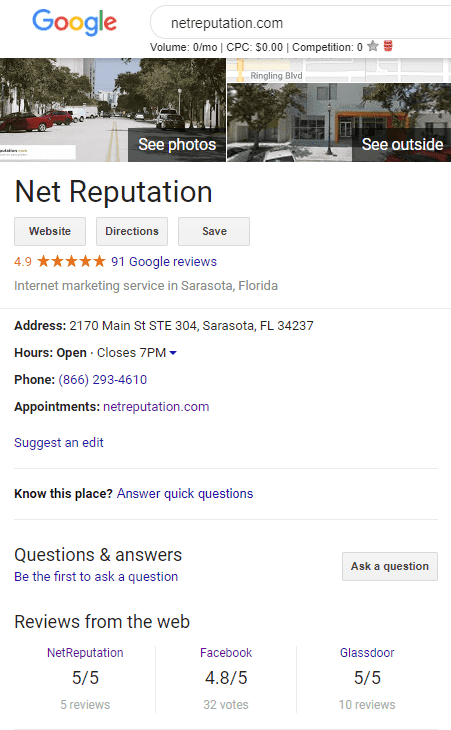
Optimizing your online business directories is one of the quickest and most effective ways to improve your search rankings. High-authority listings rank especially well for branded queries, so take the time to make sure the information included on yours is accurate and up-to-date.
Some of the most important places your profile should be visible on include:
- Google Business Profile
- Trustpilot
- Better Business Bureau (BBB)
- Industry-specific directories (e.g. dental directories)
- Yelp
- Bing Places
- Apple Maps
- Facebook Business Pages
- Nextdoor
- Foursquare
When completing each listing, make sure every section of your profile is complete. This includes updating the following information:
- Business name, address and phone number (NAP)
- A full, detailed description of your offerings
- Current hours of operation
- Clear photos of your facility, products and services
Many listing directories allow users to add reviews to your business profile. Review and respond to these regularly to maintain visibility and trustworthiness. It’s also smart to refresh the information on your profile periodically to make sure it’s aligned with your current business practices. This includes checking all of your profiles across all of your active listings.
The single-most important technical detail is ensuring that your NAP is consistent everywhere it appears on the web. If users can’t find you or contact you, you could lose critical business. Keeping this information refreshed is also a critical way to stay visible to Large Language Models (LLMs).
LLMs use directories to glean business information across industries, using sources like Yelp and Google Business Profiles to build search answers on AI platforms. This is why some platforms, like Foursquare, which have essentially retired their consumer-facing websites, remain highly relevant to local businesses. A July 2025 report by BrightLocal found that up to 70% of local results on ChatGPT come from the city guide listings on Foursquare alone.
5. Build and Maintain Active Social Media Profiles
Social profiles rank well for branded queries because they sit on high-authority domains, competing for page-one slots independently of your website. Some of the top social media platforms to build a presence on include:
- YouTube
- TikTok
- X (formerly Twitter)
- Threads
According to a report by Pew Research Center titled “Americans’ Social Media Use 2025,” 84% of Americans use YouTube regularly, while 71% use Facebook and 50% use Instagram. Your target audience is getting social and this is a great way to meet them right where they are.
However, to stand out in the increasingly crowded realm of social media, your profile must offer value to visitors. When we say “complete,” we don’t just mean that you’ve created a profile and filled it in most of the way. A truly complete social media profile will include:
- A full business bio
- Current branding (images, colors, logos)
- Regular posts
- Consistent community engagement
Businesses should also tailor content to each platform instead of reposting the same message everywhere. Video content, customer interactions, educational posts and timely updates help strengthen engagement signals and improve visibility. A strong social presence can also build trust with potential customers who research your brand before making a purchase decision.
Once you’re up and running, be sure to stay active. Search engines factor in active accounts more than dormant ones. This can be a time-consuming task for small businesses that don’t have a dedicated social media marketing team in place. From content creation to comment replies, staying on top of your social game can be a challenge, but our social media management services take care of the legwork for you.
6. Use Wikipedia Strategically (When You Qualify)
Wikipedia ranks extremely well for branded queries about companies, products and people who meet notability standards. These articles rank near the top of branded SERPs because of the domain’s authority.
Wikipedia notability standards are strict and independent secondary coverage in reliable sources is the bar. The site explicitly prohibits promotional content, so the goal is to create a factual, neutral article about your business that meets verifiability standards.
This means your company should already have meaningful, earned third-party coverage before attempting to publish a page. Articles from respected news outlets, books, industry publications and interviews or podcasts are all ways to establish notability.
It’s also important to note that Wikipedia pages are monitored and maintained by volunteer editors who actively review new submissions. These editors will remove content that seems biased, promotional or unsupported in any way. They can even challenge credible or accurate information if it lacks proper sourcing or reads too much like marketing copy.
While it might be tempting to put something together quickly just to get your name out there, it’s best to take your time and be strategic with this step. A poorly executed Wikipedia attempt can backfire, leading to consequences like:
- Site rejection
- Accusations of paid editing
- Long-term reputational damage
When approached carefully and supported by credible media coverage, a well-built Wikipedia page can become one of the strongest tools in your branded search arsenal. NetReputation offers comprehensive Wikipedia Business Page Solutions to help you conquer this step with ease. Our Individual Wikipedia Solutions cover the same ground on an individual scale, helping you write, edit, repair and rebuild your Wikipedia presence and strengthen your online credibility.
7. Build Authoritative Backlinks to the Content You Want Ranked
Publishing content is a necessary part of a successful reverse SEO strategy, but this tactic isn’t sufficient on its own.
Content ultimately competes on authority and authority comes from links. You could create the most helpful, informative and authoritative article on the web, but if people aren’t finding it and sharing it, then it will fail to achieve its goal.
A 2026 Search Engine Land report highlighted the positive correlation between the number of domains that link to a page and that page’s SERP ranking and site traffic performance. In all, most of the top-ranking pages on Google earn around 5% to 14% more followed links monthly.
If you want this same boost, there are ways to build your portfolio of backlinks. Some of the top link-building tactics that work for reverse SEO include:
- Guest contributions in relevant trade publications
- Outreach to sources cited in your content
- Mentions earned through original research
In addition to earning links from third-party sites, internal linking from your own site also helps to pass authority to the pages you want ranked.
While a single new blog post rarely displaces a major news outlet’s article, a blog post that earns ten relevant editorial links over six months might. Reverse SEO link-building is a months-long activity, but pays off much deeper than quick wins when done correctly.
8. Monitor, Measure and Maintain
Reverse SEO is not a campaign with a defined end. Instead, it requires ongoing monitoring and tracking to evaluate performance over time, helping you identify which strategies are working and which ones need refinement.
Some of the top metrics to monitor include:
- Branded keyword rankings
- New mentions across the web
- Sentiment on review platforms
- The SERP snapshot itself
While it can be helpful to perform manual SERP checks for your most important branded queries, you don’t have to track all of these checkpoints on your own. There are several online tools that can help you measure reverse SEO progress more efficiently. In addition to Google Alerts and Google Search Console, media monitoring tools can automate tracking and provide actionable, real-time results.
Continuous monitoring is important to long-term reverse SEO success because short-term improvements don’t always guarantee lasting results. For example, a page that was once suppressed can resurface if the pages ranking above it lose authority or freshness.
Even after initial gains, a long-term reputation monitoring plan is critical. Ongoing content production and link-building help ensure results represent a sustained shift in brand optimization rather than temporary improvements. NetReputation’s Reputation Monitoring Scan is one way to monitor, measure and optimize what people are saying about your brand online.
Request a Free Consultation
Reverse SEO and Online Reviews: A Special Case
Reviews are structurally advantaged in branded SERPs because they sit on high-authority platforms and match how people actually search. Reverse SEO for reviews focuses on changing the overall balance of page one, not on beating any single review platform head-on.
Reviews behave differently in search because they take place on high-authority review platforms, like Trustpilot, Google, BBB and Yelp. They also have strong domain weight and a tight intent match for queries like “[brand] reviews” or “[brand] complaints.” In many cases, these pages rank by default because they directly satisfy informational and reputational search intent, even when other brand-owned pages are available.
While you can’t typically remove Google reviews unless they violate platform policies, content suppression allows you to redirect the conversation by introducing other strong, contextually relevant content that earns visibility and engagement over time.
Some forms of content that work especially well on review-dominated SERPs include:
- A substantive customer stories page
- Case studies that show impressive outcomes
- Factual content that addresses common concerns directly
- Professional review responses that add context (Learn how to respond to negative reviews here)
- FAQ content that targets branded search intent and common complaint themes
- Third-party mentions or earned media that reinforce credibility
Reviews also act as a critical ranking factor in local SEO, especially when they show up on Google Maps or the local pack. Optimizing your business listings, keeping your NAP data consistent and monitoring sentiment helps reinforce trust signals and improve visibility. Over time, this translates to stronger engagement signals that can influence ranking and conversions.
A business review management strategy helps you monitor and respond to customer feedback to build trust and strengthen your online reputation. It also creates a feedback loop that can inform product, service and messaging improvements, which further supports long-term brand stability in search results.
How Long Does Reverse SEO Take?
Like reputation management cost, there isn’t a one-size-fits-all answer here. Reverse SEO timelines depend heavily on the authority, freshness and competitiveness of the unwanted content. Low-authority results can typically move within weeks, while high-authority news articles can take three to six months or longer, especially when multiple results are involved.
The table below breaks down the different estimated timelines based on content type. While these are the results our clients typically see, they are estimates and not guarantees since search engine behavior and competitive landscapes can shift over time.
| Type of Unwanted Content | Realistic Timeline |
|---|---|
| Weak result on a low-authority site | Four to eight weeks |
| Review or forum post on a mid-authority domain | Six to 12 weeks |
| Personal name with thin existing content | Six to 12 weeks to establish strong owned assets |
| Article on a high-authority news site | Three to six months or longer |
| Multiple negative results across domains | Four to eight months for a meaningful page-one shift |
How long does reputation management take? As you focus on your efforts, it’s important to maintain a long-term perspective, understanding that sustainable change requires consistent attention, not one-time fixes. Most successful reverse SEO campaigns are built in phases, starting with quick wins and gradually layering in stronger authority signals over time.
In reverse SEO, movement is rarely linear. Rankings can fluctuate as Google re-evaluates relevance, authority and engagement signals. A page may drop, resurface and stabilize again before settling into a new position. This is why patience matters and where consistency pays off. Search engines reward steady, ongoing effort. Sporadic activity rarely produces lasting change or durable one-page suppression.
When to Hire a Reverse SEO Company
Reverse SEO is doable on your own for simpler, more contained cases. However, more complex cases, such as multi-source attacks, legal considerations, or sustained reputational harm across multiple platforms, are typically best handled by a professional reverse SEO firm. At that level, expert support can save significant time and help you avoid strategic missteps that could unintentionally amplify visibility or slow down recovery efforts.
If any of the below signals apply to you, then DIY reverse SEO may be sufficient:
- You have a single low-authority negative result.
- You have time to build and publish content consistently over several months.
- You already have some internal content production capacity or marketing support
On the other hand, there are clear indicators that a DIY solution is unlikely to be enough and professional help may be warranted:
- You have multiple negative results across different domains
- You’re facing legal, compliance or defamation-related considerations
- You have a public-facing role where ranking damage has an immediate financial or operational impact (such as executives or regulated professionals)
- You have already attempted suppression with limited or no success
- You are under significant time pressure to improve search visibility quickly
A professional ORM firm offers several advantages that a DIY approach typically cannot match, making the reputation management cost more strategic than reactive. These teams often have established media outreach networks for strategic press placement, helping reposition brand narratives through authoritative third-party coverage. They can also scale content production more effectively, deploy technical SEO infrastructure improvements and coordinate legal reviews when necessary to ensure accuracy and compliance in sensitive cases.
In addition, experienced firms continuously track rankings, sentiment and SERP activity to help you refine your strategy in real time rather than relying on periodic manual checks.
Knowing how to find the best reputation management service is a key step toward long-term success. One of the most important benefits of working with an ORM firm is the ability to track your campaign results continually, so you’re always aware of how your efforts are performing and can adjust your strategy accordingly. As an Inc. 5000 recognized firm, NetReputation offers a satisfaction guarantee on removal services, giving you added confidence that your ORM strategy is backed by measurable results and ongoing expert support.
Frequently Asked Questions
Below are answers to some of the most common questions we receive about our reverse SEO services:
What is reverse SEO?
Reverse SEO is the process of using ethical, Google compliant SEO strategies to help stronger pages outrank harmful results for branded searches. The goal is to move negative content lower in search results, where it’s less likely to influence public perception or buying decisions.
This process improves the visibility and authority of more favorable pages, so Google considers them the better result for a given query.
How is reverse SEO different from negative SEO?
Reverse SEO is an ethical, white hat process that operates on content you control or earn, such as your website or social media profiles. Negative SEO is a black hat attack on a competitor that violates Google’s guidelines. Knowing the difference can help you avoid online penalties that could damage your reputation, ranking and authority.
How long does reverse SEO take?
There isn’t a standard timeline for reverse SEO. Low-authority results can typically move within weeks, while high-authority news articles can take three to six months or longer especially when multiple results are involved. Reference our chart above for a more detailed breakdown by content type.
Does reverse SEO actually work?
Yes. Reverse SEO can help you suppress damaging content and improve your SERP rankings when done ethically and with the support of a professional ORM firm. However, this strategy does have its limits. It influences what people see on page one but does not erase unwanted content completely.
Can I do reverse SEO myself?
In some simple cases, a DIY approach to reverse SEO may be feasible. In this article, we’ve shared eight tactics that can help you move up the SERP rankings on your own. However, professional help from an ORM firm is recommended for complex cases that include multi-source attacks, legal considerations or sustained reputational harm.
When should I hire a reverse SEO company?
Hiring a reverse SEO company can save you time and energy if you’re facing multiple negative results across various domains or any kind of scenario that involves legal, compliance or defamation-related issues. Our online reputation repair team can help you navigate these situations especially if you’re under time pressure or you’ve attempted this strategy on your own before without success.
Final Thoughts on Reverse SEO
Reverse SEO is about influence, not control. The realistic outcome is a page one that reflects a broader, more accurate picture of your brand, with unwanted results pushed down but not completely erased.
With the right strategy, negative content stops being the headline and instead becomes just one part of a much larger digital footprint. Over time, this allows you to regain control of your online reputation, strengthen brand credibility and create a search presence that better reflects who you are today. A strong reverse SEO campaign also builds long-term resilience, making it harder for future negative content to dominate branded search results.
Are you ready to see what your current SERP actually says about your business? Contact us for a free analysis to uncover hidden reputation risks and build a customized strategy designed to protect and strengthen your online presence, starting today.